

〰️
Explore Confidently
〰️
Dream Bigger
〰️
Travel Fearlessly
〰️ Explore Confidently 〰️ Dream Bigger 〰️ Travel Fearlessly
Travel With Diabetes,
With Confidence
Having diabetes changes how you prepare for travel. It doesn’t have to change where you’re able to go.
Everything you need to feel prepared, capable, and ready for your next adventure.
What are you Worried About?
Tap a topic below to get answers, strategies, and practical tips.
-
Flying with diabetes can feel intimidating, especially when you are carrying insulin, medications, devices, and extra supplies. Preparation can make the experience feel much more manageable.
Before You Fly
• Keep essential diabetes supplies in your carry on.
• Bring extra supplies in case of delays or unexpected problems.
• Keep fast acting glucose somewhere you can easily reach.
• Review current airport security guidance and your device manufacturer’s screening recommendations.
During Your Flight
Monitor your glucose, stay hydrated, and remember that changes in meals, activity, sleep, stress, and time zones may affect your usual patterns.
Have a backup plan for lows, highs, device problems, and unexpected delays. You do not need a plan for everything, just the situations you are most likely to encounter.
Give Yourself Some Confidence
You already manage diabetes every day. Flying simply means managing it somewhere new. You still have your supplies, knowledge, experience, and ability to respond when something needs your attention.
Your first flight may feel like a huge step. Once you have done it, the airport, security, and flight itself can start feeling much more familiar.
You can be nervous and still go. Diabetes may require more preparation, but it does not have to keep you from seeing the world.
-
Worrying about running out, losing something, or having a device fail is completely understandable. The best way to reduce that stress is to pack with backups and know what you will do if something goes wrong.
Before You Travel
• Bring more diabetes supplies than you expect to need.
• Keep essential medications and supplies in your carry on.
• Pack backups for the equipment you rely on whenever possible.
• Check how your insulin and other medications should be stored while traveling.
Create a Backup Plan
Think through what you would do if your pump, CGM, meter, or other equipment stopped working. Keep important manufacturer contact information accessible and talk with your diabetes care team before traveling about an appropriate backup plan.
Avoid keeping every critical supply in one place. When possible, separate backup supplies so one lost or damaged bag does not leave you without everything.
Give Yourself Some Confidence
You cannot guarantee that nothing will go wrong while traveling, but you can prepare yourself to handle many of the problems that could happen.
Every backup you pack and every plan you make gives you another layer of protection and one less thing to worry about.
Your supplies are part of the journey, but they do not have to control it. Prepare well, have a backup plan, and give yourself permission to enjoy where you are going.
-
Eating unfamiliar foods can feel stressful when you have diabetes, especially when you do not know the ingredients, portion sizes, or carbohydrate counts. You may not get every estimate perfect, and that is okay. Preparation and experience can make eating abroad much easier.
Before You Travel
• Learn about common foods at your destination.
• Look up useful food and allergy phrases in the local language.
• Keep low treatments and familiar snacks with you.
• Save a nutrition or translation app for extra help.
When You’re Eating
Use the information available to make your best estimate. Look at portion sizes, compare unfamiliar foods with similar foods you already know, and use nutrition information when it is available.
Monitor your glucose and learn from how your body responds. One imperfect estimate does not mean you did anything wrong or that you cannot enjoy local food.
Give Yourself Some Confidence
Food is one of the best parts of experiencing a new destination. Diabetes may mean thinking about a meal differently, but it does not mean you have to miss out on it.
You already make food decisions every day. Traveling simply introduces new foods to the skills you already use.
You do not need to know the exact carb count of every meal to explore, try something new, and enjoy the food that makes travel memorable.
-
Thinking about a medical emergency far from home can be scary, especially in an unfamiliar country. You cannot prepare for every situation, but knowing where to turn and having a plan can make the unexpected feel much less overwhelming.
Before You Travel
• Learn the local emergency number for your destination.
• Know how to find nearby hospitals and pharmacies.
• Keep your insurance and emergency information accessible.
• Carry identification that communicates that you have diabetes.
Have a Plan
Keep important medical information, medication details, emergency contacts, and insurance information somewhere you can quickly access them.
Know what you would do if you became seriously ill, experienced severe low or high glucose, lost essential medication, or needed urgent medical care. If something feels beyond what you can safely manage yourself, seek professional medical help.
Give Yourself Some Confidence
Preparing for an emergency does not mean you should expect one to happen. It simply means you have given yourself a plan if you ever need it.
You manage unexpected situations with diabetes in everyday life already. Traveling changes your surroundings, but it does not take away your knowledge or ability to ask for help.
You do not have to travel without fear. You just need enough preparation to know that if something goes wrong, you have a place to start.
-
Your first international trip can feel overwhelming even without diabetes. Add medications, supplies, unfamiliar food, airports, and a different healthcare system, and it is completely normal to have questions. You do not need to figure everything out at once.
Before Your First Trip
• Choose a destination you feel comfortable exploring.
• Research healthcare, pharmacies, transportation, and local food.
• Learn the entry requirements and important local information.
• Give yourself plenty of time to prepare your diabetes supplies.
Take It One Step at a Time
Start with the basics. Book your transportation and accommodations, learn about your destination, create a diabetes backup plan, and then work through your packing.
You do not need to become an expert traveler before you leave. Your first international trip is where you begin learning what works best for you.
Give Yourself Some Confidence
Almost every experienced traveler once stood where you are now, wondering what their first international trip would actually be like.
There will probably be things you did not expect, and that is part of traveling. Each airport, flight, meal, and new destination gives you experience that makes the next trip easier.
Your first international trip may feel like the biggest step. Once you take it, the world can start feeling a whole lot smaller.
-
Planning a trip with diabetes can feel like a lot. Flights, hotels, medications, supplies, food, emergencies, and everything else can quickly become overwhelming. You do not need to solve every part of your trip at the same time.
Start With the Basics
• Choose where you want to go and when.
• Book your major transportation and accommodations.
• Make a list of the diabetes supplies you will need.
• Work through the remaining details one step at a time.
Focus on What You Can Control
You do not need a plan for every possible situation. Focus on having enough supplies, protecting your medications, knowing your backup plan, and understanding how to get help if you need it.
Break your planning into smaller tasks. What feels overwhelming as one giant trip can feel much easier when you handle one decision at a time.
Give Yourself Some Confidence
You do not have to feel completely confident before you travel. Confidence often comes from preparing, taking that first trip, and realizing how much you are actually capable of handling.
It is okay to have questions. It is okay to feel nervous. Neither means you are not ready to experience the world.
You do not have to have everything figured out today. Start with one step, then the next. Eventually, those small steps become an adventure.
Never Traveled Internationally With Diabetes?
Follow these 5 steps to build confidence and set yourself up for success.
-
Some places are easier for first-time travelers with diabetes. Look for good access to healthcare, pharmacies, and food options.
-
Understand healthcare, pharmacies, emergency numbers, food, language, transportation, and local customs.
-
Plan for pump failure, CGM failure, lost medication, illness, and other unexpected situations.
-
Bring more than you think you need and keep essentials in your carry-on. Always have a plan B.
-
You can’t plan for everything, but you can be ready for what matters most.
What Would You Do If…?
Real travel situations and how I handle them.
-
Use your backup insulin plan, contact the manufacturer, and find a pharmacy or medical provider. Know your settings and have backup supplies with you.
-
Keep your essential diabetes supplies in your carry-on bag. Pack redundancy and never check your insulin, CGM, or vital supplies.
-
Use portion estimation, ask questions, or choose simpler meals. Use apps and carry reference guides. Don’t be afraid to ask for help.
-
Hydrate, monitor more often, know when to seek medical care, and have a plan for communicating in another language.
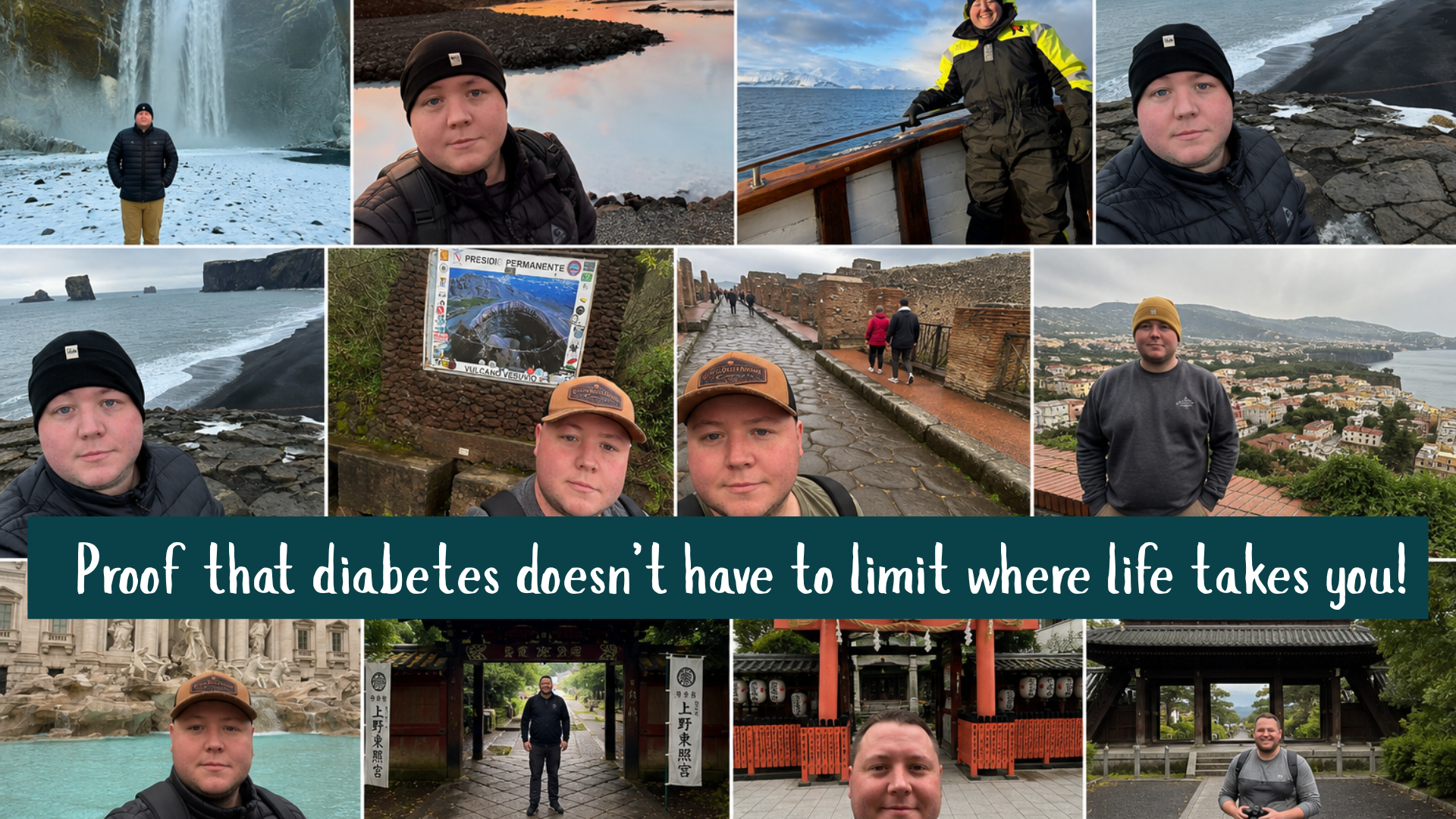
After almost 10 years of wondering whether Type 1 diabetes would keep me from seeing the world, I finally booked a solo trip to Italy. Things didn't exactly go according to plan, but that first international trip changed how I saw travel, diabetes, and what I was capable of.