
Japan in Autumn: How to Chase Fall Foliage Across the Country
Cherry blossom season gets most of the international attention, but autumn gives travelers another reason to plan an entire trip around Japan's changing landscape.
Known as koyo, Japan's autumn foliage season doesn't arrive everywhere at once. Color begins appearing in cooler northern and higher-elevation areas first, then gradually works its way south as temperatures fall. That means travelers can potentially find autumn color somewhere in Japan from roughly late September into early December, depending on the destination, elevation and weather that year.
And if you're thinking about traveling to Japan this fall, September is when I would start taking that idea seriously.
Not because there's one magical week you have to hit perfectly, but because the destination you choose determines when your autumn trip should happen.
That's where I would start.
Why I'd Consider Japan in Autumn
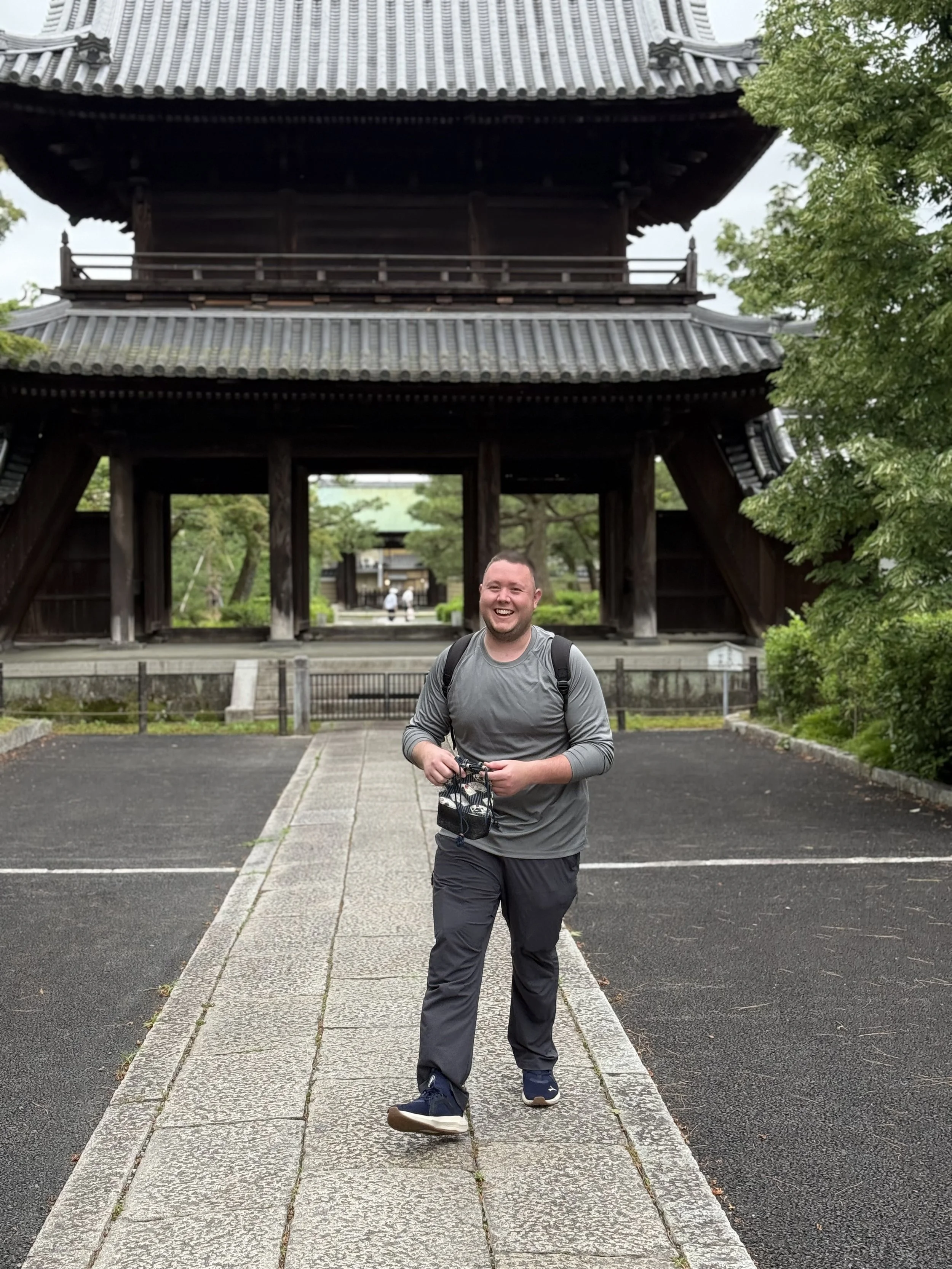
I traveled through Japan in late spring, so I haven't personally experienced Japan during koyo season yet. But having traveled through Tokyo, Kyoto, Osaka and other parts of the country, I can absolutely understand why autumn works so well with the way Japan is already set up for travelers.
One of the things I loved most about traveling Japan was how easy it was to move between completely different environments.
I could be navigating one of the busiest cities in the world and then, not long afterward, be walking through a temple, garden or much quieter neighborhood.
Japan's rail network makes that kind of itinerary particularly appealing when you're trying to follow the foliage rather than stay in one place.
And autumn adds another advantage: instead of chasing one nationwide peak date, you can choose your route around the part of the country expected to be changing color when you're there.
Japan also ranked among the countries highlighted in my World's Safest Countries to Visit in 2026article, which is another reason it continues to stand out to me as a destination worth considering.
How the Color Actually Moves Across Japan
Here's probably the most important thing to understand before planning a fall foliage trip:
Koyo isn't one national event.
It's more like a wave moving through the country.
Northern Japan and higher elevations generally change first, while lower elevations and destinations farther south follow later. The exact timing changes from year to year depending on temperatures and weather conditions, which is why I wouldn't build an entire trip around one predicted peak date months in advance.
As a general planning framework:
Hokkaido: Start looking from late September into October.
Tohoku: October into November.
Kanto and Chubu: October into November, depending heavily on elevation.
Tokyo: Often becomes more of a late-autumn destination.
Kyoto and Kansai: November into early December is the window I'd pay particular attention to.
Kyushu: Autumn color can continue into late November and early December.
Think of those as planning windows, not guaranteed peak dates.
The closer your trip gets, the more important current foliage reports become.
For Kyoto specifically, the city's official tourism site maintains a foliage tracker, while the Japan National Tourism Organization publishes seasonal autumn information for travelers. Those are the kinds of sources I'd check again shortly before departure rather than trusting a date you found months earlier.
Kyoto Is Where I'd Start
If I were building a trip specifically around autumn foliage, Kyoto would be very difficult for me to leave off the itinerary.
And I've already experienced how much there is to see in Kyoto without autumn color added to the equation.
Tofukuji is one of Kyoto's best-known autumn foliage destinations. Its maples make it an extremely popular fall stop, particularly around the Tsutenkyo Bridge area. JNTO specifically identifies the temple as one of Kyoto's famous autumn foliage locations.
Then there's Eikando, another temple known specifically for its autumn display and evening illumination. Its Hojo Pond and surrounding gardens give you a completely different setting from Tofukuji.
And on the western side of Kyoto, Arashiyama combines seasonal scenery with the bamboo grove, temples and Togetsukyo Bridge. It's easy to reach by rail from Kyoto, which makes it possible to devote an entire part of your day to the area without needing a rental car.
Don't Make the Mistake of Trying to See Everything
This is where I'd resist the urge to build one of those itineraries that looks fantastic on paper and becomes exhausting by noon.
Kyoto has enough temples, gardens and foliage spots to fill days.
Pick a couple of priorities and actually give yourself time to experience them.
That's especially important if you're managing diabetes, because sightseeing in Kyoto can involve considerably more walking than you realize while you're planning everything from home.
And always check the actual opening time before planning an early-morning visit.
For example, Kyoto's official tourism information currently lists Tofukuji's autumn viewing period at 8:30 AM to 4:30 PM (8:30 to 16:30). So while arriving early can still be useful, showing up at 6:30 AM (6:30) isn't going to magically get you into an attraction that hasn't opened yet.
That's the kind of tiny planning detail that can completely change how your morning goes.

An early start can give you more breathing room before Kyoto's most popular areas get busy.
Don't Forget the Places Beyond the Famous Temples
One thing I'd encourage with an autumn Japan trip is leaving some room for places that aren't necessarily the first result you see on every “best fall foliage in Japan” list.
Even within Kyoto, there are alternatives.
Enkoji, for example, has a garden filled with maple trees that turn red and orange in autumn, along with a smaller bamboo forest behind its pond. JNTO specifically suggests it as an alternative if Arashiyama's famous bamboo forest feels too crowded.
Jojakkoji on Kyoto's western edge is another temple known for autumn leaves and views over Kyoto.
And Kyoto's official 2026 calendar already includes seasonal events. Kitano Tenmangu's Momiji-en autumn garden is scheduled for October 31 through December 6, 2026, with evening illumination scheduled from November 7 through December 6.
Those are the kinds of details I'd use to fill the spaces between the big-name attractions instead of trying to cram five famous temples into one day.
Tokyo and Osaka Don't Have to Be Just Bookends
It's easy to build an autumn Japan itinerary entirely around Kyoto.
I wouldn't.
If you're flying into Tokyo anyway, give yourself time there rather than treating it purely as an airport stop.
The same applies to Osaka if your route takes you through Kansai.
This is something I appreciated when I traveled Japan: you don't have to choose between the giant-city experience and the quieter, more traditional side of the country.
You can have both on the same trip.
And because so much of the country is connected by rail, a foliage-focused trip can become something like:
Tokyo → Kyoto → Osaka
or
Tokyo → Kyoto → Osaka + an additional day trip
without turning the entire vacation into a road trip.
That flexibility is one of the things that made Japan such an enjoyable country for me to travel through.
“One of the things Japan taught me is that you don’t have to rush through a place just because there’s a lot to see. Sometimes the parts you remember most are the moments when you actually slow down enough to look around.”
Planning an Autumn Trip With Diabetes
This is where my firsthand experience in Japan becomes much more relevant.
Japan involved a lot of walking for me.
That's something I'd be thinking about just as much as the foliage forecast if I were planning an autumn trip with diabetes.
A day that looks fairly simple on an itinerary can turn into hours on your feet once you combine train stations, temple grounds, neighborhoods and walking between attractions.
For me, that means thinking ahead about glucose, supplies and what I have with me before leaving the hotel.
One thing I particularly appreciated in Japan was the convenience-store culture.
Japanese convenience stores or konbini sell snacks, drinks, ready-made food and other everyday necessities, and JNTO notes that major chains operate in both cities and rural areas.
I wouldn't treat a convenience store as my diabetes emergency plan, but having so many places to buy food and drinks was genuinely useful while I was traveling.
And I would still carry the diabetes supplies and fast-acting carbohydrates I expect to need rather than assuming I'll be able to buy exactly what I want along the way.
That's the difference between something being available and depending on it being available.
I've also learned that having the right travel essentials with me can make a huge difference on long sightseeing days, especially when I know I'll be away from the hotel for hours.
If this is your first international trip with diabetes, my Diabetes Travel Basics page goes deeper into the preparation side of traveling.
Also, having reliable mobile data was also incredibly useful while I was traveling Japan. I was constantly using my phone for maps, train information, translations and figuring out where I needed to go next. If you want mobile data without having to pick up a physical SIM card after you arrive, Airalo offers eSIM options for Japan that you can set up before your trip.
Affiliate disclosure: I may earn a commission if you purchase through this link, at no additional cost to you.
Build Some Breathing Room Into Your Itinerary
If I were planning this trip, I wouldn't schedule every morning through evening.
I'd build around a few priorities.
Maybe Tofukuji is the thing I absolutely want to see in Kyoto.
Great.
That becomes an anchor.
Then I'd leave enough flexibility around it that if the foliage is better somewhere else, the weather changes, I'm exhausted from walking, my blood sugar decides it has its own itinerary, or I simply find somewhere I want to spend another hour, I can change plans without feeling like I've ruined the day.
That's particularly important with a seasonal trip.
You're traveling to experience something that's changing in real time.
You can't control exactly when every tree changes color.
You can control how much flexibility you give yourself to go find it.
The Bottom Line
Japan's autumn foliage season isn't about finding one perfect week when the entire country suddenly turns red.
That's actually what makes it interesting.
The color moves.
Hokkaido begins changing while much of the country is still waiting. Eventually the season reaches central Japan, Kyoto and Kansai before continuing farther south.
So instead of asking:
“What's the best week to visit Japan for fall foliage?”
I'd ask:
“Where in Japan is likely to have fall color during the dates I can travel?”
That's a much better starting point.
Choose your region around your dates, keep checking current foliage information as the trip gets closer, book the things you absolutely care about, and leave enough room in the itinerary to adjust.
Because Japan already taught me something important when I traveled there:
You can prepare for a trip as much as you want.
But eventually, you have to stop planning long enough to actually experience the place.
Start Planning Your Japan Trip
If Japan has been sitting on your travel list, the Glucose Getaways Japan destination guide takes the next step and helps you work through the practical side of planning the trip with diabetes in mind.
From transportation and destination information to the details that are much easier to figure out before you land, it's designed to give you a head start.
Sources & Official Travel Information
Japan National Tourism Organization — Autumn in Japan →
Kyoto City Official Travel Guide — Autumn Leaves Information →
Japan National Tourism Organization — Tofukuji Temple →
Japan National Tourism Organization — Eikando Temple →
Japan National Tourism Organization — Arashiyama →
Japan National Tourism Organization — Enkoji Temple →
Japan National Tourism Organization — Jojakkoji Temple →
Kyoto City Official Travel Guide — Kitano Tenmangu Momiji-en 2026 →
Kyoto City Official Travel Guide — Tofukuji Visitor Information →
Travel & Health Note
This article is provided for general informational purposes and reflects personal travel experiences alongside publicly available travel information. Autumn foliage timing, attraction hours, seasonal events, transportation information and travel conditions can change. Diabetes needs and travel considerations can also vary from person to person. Always check current official information before traveling and speak with your healthcare provider about your individual medical needs.
Stay Connected in Japan
Need mobile data for maps, train information and translations? Check out Airalo’s Japan eSIM Options.
Travel Gear I Use & Recommend
See the travel gear I personally use and recommend for international trips.