

Diabetes in the Hispanic Community: What the Numbers Say, and Why It Should Never Keep You Home
National Hispanic Heritage Month runs from September 15 to October 15, and much of what surrounds it is rightly a celebration of history, music, food, family, traditions, and the many cultures represented under one very big umbrella.
I want to add something else to that conversation because diabetes affects a significant number of Hispanic and Latino families in the United States.

Hispanic Heritage Month celebrates the histories, cultures, and traditions of diverse Hispanic and Latino communities.
I live with type 1 diabetes, and I started Glucose Getaways because I believe a diagnosis should never shrink someone's world.
So this isn't a post about fear.
It's about understanding the numbers, recognizing that diabetes doesn't affect every community in exactly the same way, and making sure a diagnosis doesn't automatically take food, family, culture, or travel off the table.
What the Numbers Actually Say
The numbers are significant.
According to the American Diabetes Association, diagnosed diabetes affected 11.8% of Hispanic adults in the United States compared with 7.1% of non Hispanic white adults during 2021 through 2023. The ADA also reports that Hispanic adults are 66% more likely to have diagnosed diabetes than non Hispanic white adults.
But there's an important detail behind those numbers.
Hispanic and Latino communities aren't one population with one experience or one diabetes rate.
ADA data for 2019 through 2021 show substantial differences by heritage:
Puerto Rican: 13.3%
Mexican or Mexican American: 11.1%
Dominican: 9.4%
Cuban: 9.0%
Central American: 7.3%
South American: 5.0%
Other Hispanic, Latino, or Spanish: 7.2%
Those differences matter.
Someone with roots in Puerto Rico, Mexico, Cuba, the Dominican Republic, Central America, or South America may have different traditions, foods, family histories, environments, and experiences with healthcare.
Putting everyone into one category can hide a lot of that variation.
“There isn’t one Hispanic experience with diabetes. The numbers themselves show us that.”
Why the Risk Isn't About One Thing
There isn't one explanation for disparities in diabetes.
And reducing the conversation to traditional food misses a much larger picture.
The CDC recognizes that social determinants of health can affect people's ability to access healthcare and diabetes support. These can include insurance coverage, transportation, food security, cost barriers, and access to services that are culturally and linguistically appropriate. CDC data have also found that lack of health insurance is more prevalent among Hispanic adults than white adults.
Family history and other established type 2 diabetes risk factors matter too. The CDC identifies having a parent or sibling with type 2 diabetes as one risk factor and also recognizes Hispanic and Latino Americans among populations with higher risk.
That means this conversation is considerably more complicated than blaming one food, one habit, or one person.
Understanding the barriers is important because it gives us something much more useful than blame: a better idea of where support, education, screening, and access can make a difference.
The Food Is Not the Enemy
Food and culture can be deeply connected.
A diabetes diagnosis shouldn't automatically mean abandoning the dishes that have been part of someone's family for generations.
The American Diabetes Association specifically recognizes that healthy eating is personal and can be closely connected to culture, family, and community. Its Diabetes Food Hub includes recipes and meal planning resources across different cuisines, including Mexican dishes, and the ADA offers Spanish language nutrition resources as well.
Traditional foods can include beans, lentils, vegetables, avocado, eggs, fish, chicken, fresh salsas, tortillas, rice, fruit, and countless other foods that vary dramatically by country, region, and family.

Traditional Peruvian cuisine in Arequipa, one example of the many distinct food traditions found across Hispanic and Latino cultures.
Diabetes doesn't require one universal menu.
What affects glucose can also differ between people, and portions, ingredients, medications, activity, timing, and individual glucose responses all matter.
From my own experience living with type 1 diabetes, I've learned that enjoying food and managing diabetes don't have to be opposing goals.
I'd rather understand what I'm eating, pay attention to how my own body responds, and make decisions that work for me than look at an entire culture's food and label it off limits.
Culture doesn't need to disappear from the table because diabetes showed up.
Family and Community Can Matter
Family can play an important role in diabetes care, but Hispanic and Latino families are every bit as varied as any other families.
Some people live in multigenerational households. Others don't.
Some families talk openly about health. Others may barely discuss it.
What matters is that support can make diabetes feel less isolating.
That might mean learning what hypoglycemia looks like for someone who uses insulin, making it easier to talk about family history, helping someone get to an appointment, sharing healthier recipes, or simply asking how someone is doing.
CDC research has found that participation in diabetes education has been lower among Hispanic and Latino people, and the agency specifically highlights the importance of diabetes education that accounts for language and culture.
So if diabetes runs through a family, talking about it can be useful.
Not because every family needs to change everything they eat.
Because knowing your family's history and having people around you who understand what's happening can matter.
Three Things Worth Knowing About
If this article makes you think about your own risk or someone in your family, there are a few credible resources worth knowing about.
1. Take the ADA's Type 2 Diabetes Risk Test.
The American Diabetes Association offers a free 60 second risk test. It isn't a diagnosis, but it can help identify whether it may be worth discussing testing with a healthcare professional.
2. Ask a healthcare professional whether screening is appropriate for you.
The CDC lists several type 2 diabetes risk factors, including family history, age, physical activity, a history of gestational diabetes, and certain other health factors. Hispanic and Latino Americans are also among the populations the CDC identifies as having increased risk.
3. Know that the National Diabetes Prevention Program exists.
For people with prediabetes or at risk for type 2 diabetes, the CDC led National Diabetes Prevention Program provides access to structured lifestyle change programs. The original Diabetes Prevention Program research found that its structured lifestyle intervention reduced the risk of developing type 2 diabetes by 58% among adults at high risk compared with placebo.
Knowing your risk doesn't mean diagnosing yourself.
It means knowing when it might be worth having a conversation with someone qualified to help.
And Yes, You Can Still Take the Trip
This is where Glucose Getaways comes back into the conversation.
For some Hispanic and Latino families in the United States, international or domestic travel isn't simply about taking a vacation.
Sometimes it's visiting relatives, attending a wedding, spending a holiday together, returning to a place connected to your family, or introducing the next generation to somewhere important to your heritage.
Diabetes can make those trips require more preparation.
It doesn't automatically make them off limits.
If I were traveling with insulin or other diabetes supplies, I'd keep essential medication and supplies accessible and bring appropriate backups.
I'd also pay attention to temperature.
The FDA advises protecting insulin from extreme temperatures, keeping it away from direct heat and sunlight, and never using insulin that has been frozen. Because storage requirements can vary by insulin product, I'd follow the instructions for the insulin I'm actually carrying rather than relying on one universal travel rule.
And communication is another part of travel preparation.
If Spanish would be useful at your destination, a few basic diabetes related phrases can be worth saving to your phone:
“Tengo diabetes.”
I have diabetes.“Uso insulina.”
I use insulin.“Tengo el azúcar bajo.”
My blood sugar is low.“Necesito azúcar, por favor.”
I need sugar, please.“¿Dónde está la farmacia más cercana?”
Where is the nearest pharmacy?
A phrase card isn't a substitute for knowing how to handle a diabetes emergency, but it can make communication easier when you're somewhere unfamiliar.
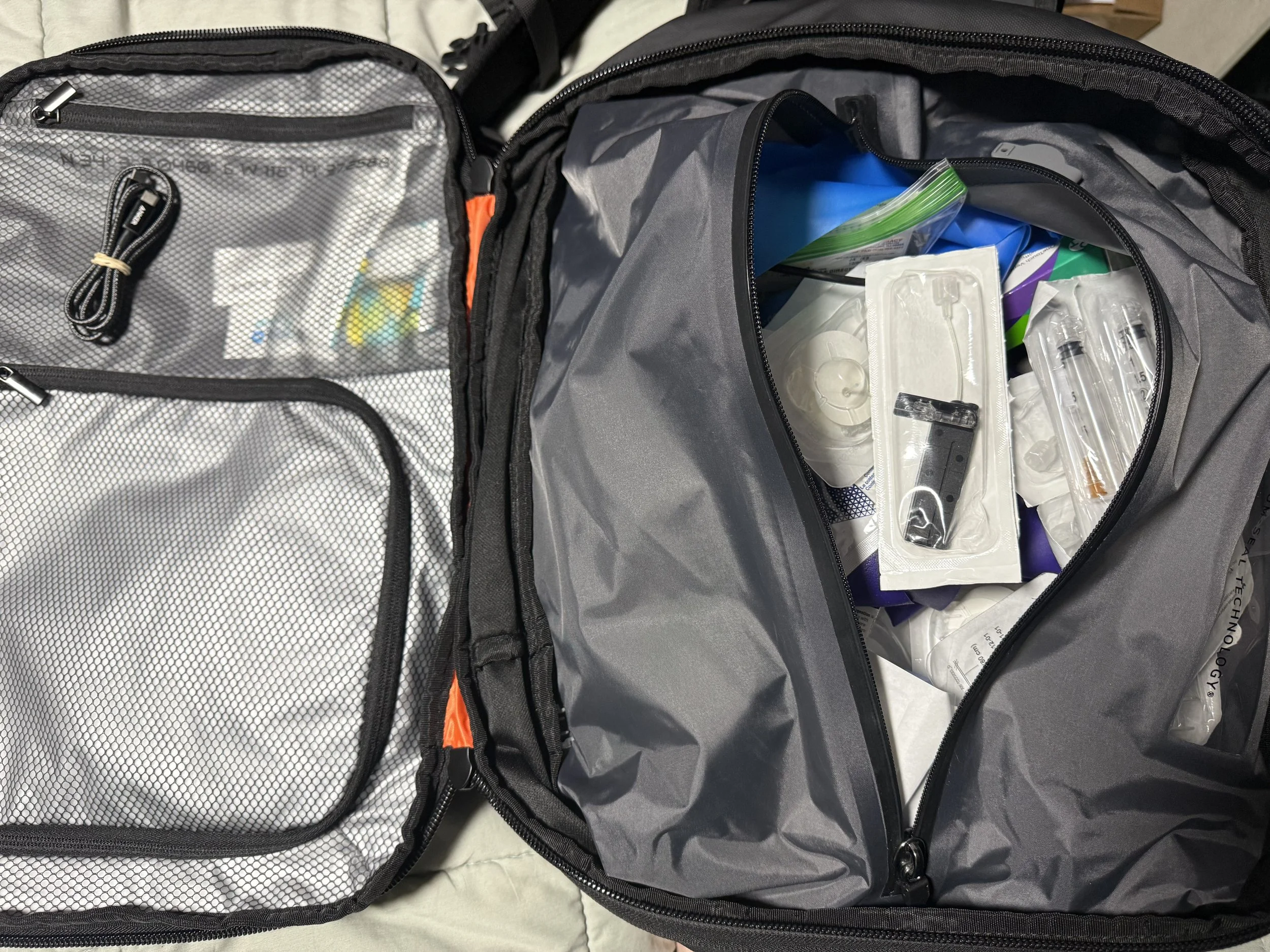
My diabetes supplies packed and ready to travel, because preparation is part of the trip, not a reason to miss it.
If this would be your first trip since diagnosis, start with Diabetes Travel Basics and the free Diabetes Travel Planner.
I'd also save the Diabetes Emergency Resources page to your phone before leaving.
And if you're wondering whether the anxiety before that first big trip ever goes away enough to actually get on the plane, you can read the story of my first international trip with type 1 diabetes.
I spent years hesitating before I finally did it.
The preparation mattered.
But so did going.
Honor the Heritage, Protect the Future
Hispanic Heritage Month is about celebrating histories, cultures, and contributions that span countries, generations, languages, foods, music, traditions, and families.
Diabetes belongs in the health conversation too.
Know the numbers.
Know your family's history when you can.
Keep the recipes.
Ask questions.
Bring the backups.
And keep going places.
Diabetes may be part of the story. It doesn't have to decide how small the story becomes.
A portion of what Glucose Getaways earns is dedicated to supporting diabetes related causes, including research and efforts to improve access to insulin. You can learn more on the Our Giving page.
And when you're ready to start thinking about the next trip, you can explore all Glucose Getaways destinations and find planning resources designed to make traveling with diabetes feel a little less overwhelming.
Sources & Official Health Information
Diabetes statistics, health recommendations, screening guidance, and other health information can change over time. These are the primary sources referenced in this article.
American Diabetes Association: Diabetes and the Hispanic Community →
American Diabetes Association: Diabetes Statistics →
American Diabetes Association: Type 2 Diabetes Risk Test →
American Diabetes Association: Diabetes Food Hub →
Centers for Disease Control and Prevention: Type 2 Diabetes Risk Factors →
Centers for Disease Control and Prevention: National Diabetes Prevention Program →
Centers for Disease Control and Prevention: Diabetes Education →
Centers for Disease Control and Prevention: Health Disparities and Social Determinants →
U.S. Food and Drug Administration: Insulin Storage →
Travel & Health Note
This article is provided for general informational and educational purposes and includes personal perspectives about living and traveling with diabetes. Diabetes risk, nutrition needs, glucose responses, medication requirements, screening recommendations, and treatment decisions vary from person to person. This information is not a substitute for individualized medical or nutrition advice. Speak with an appropriately qualified healthcare professional about your individual health needs.